
Ahr
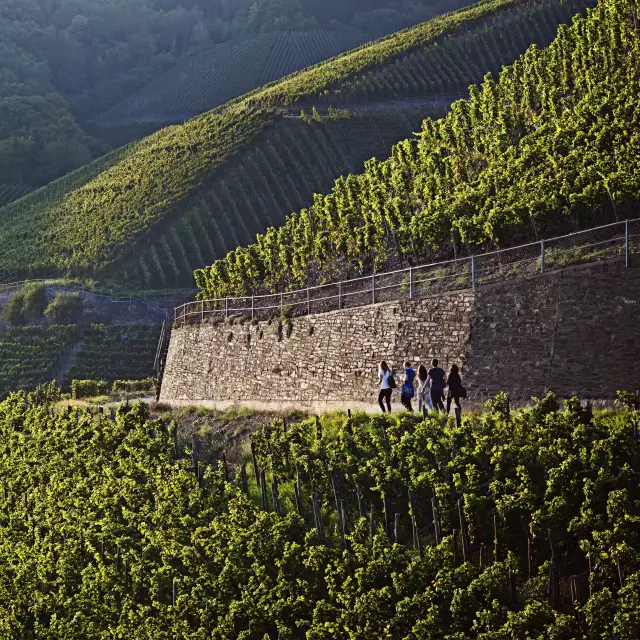
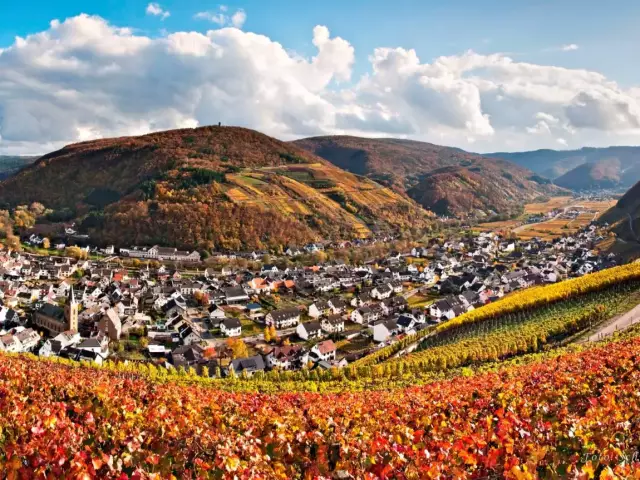
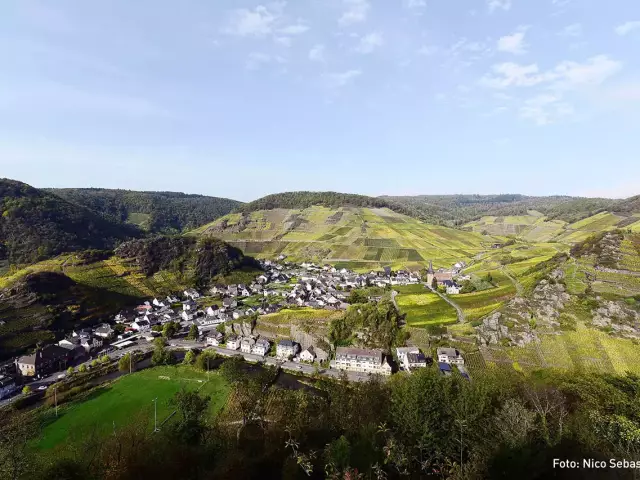
With 535 hectares of vineyards, the Ahr is one of the smallest wine-growing regions in Germany. Mainly red wines thrive on the steep slopes above the river.
Facts
-
535 ha
Vineyard area (2025)
-
40
single vineyards
-
64,9 %
Pinot Noir
Yet it is not only lovers of outstanding red wines who make the pilgrimage to Germany’s red wine paradise.
As early as Roman times, people recognized the climatic advantages of the wild and romantic Ahr Valley and planted the first vines here. Today, the Ahr Valley in the north of Rhineland‑Palatinate presents itself as a distinguished red‑wine region. Alongside the king of red grapes, Pinot Noir, the equally esteemed Frühburgunder (Pinot Noir Précoce) is one of the region’s specialties. Slow Food is committed to protecting such high‑quality, artisanal products.
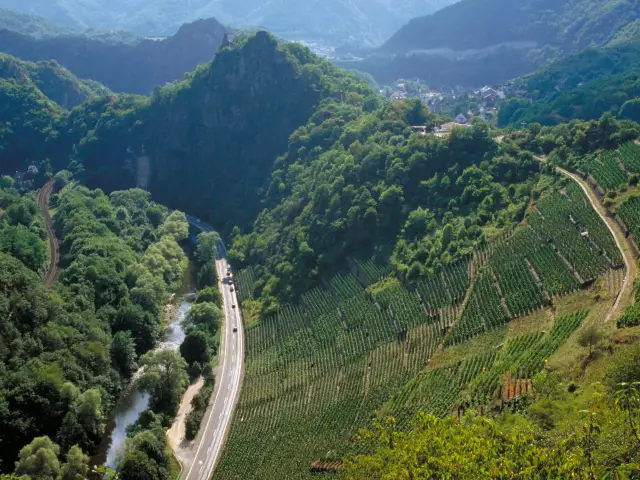
This includes preserving the rare Frühburgunder vineyards, maintained with dedication by the winegrowers of the Ahr. Producing top wines in this region requires considerable effort. Winegrowers often have to climb through rugged rock crevices into extreme steep slopes to tend the vines and harvest the grapes—sometimes in places where only a few rows can be planted side by side. Exceptional quality rewards the demanding work in these vineyards.
With 79 percent of its vineyards planted with red varieties, the Ahr has the highest proportion of red wine grapes of any wine-growing region in Germany. Around two‑thirds of its vineyards are planted with Pinot Noir (347 ha).
Overview of the Ahr
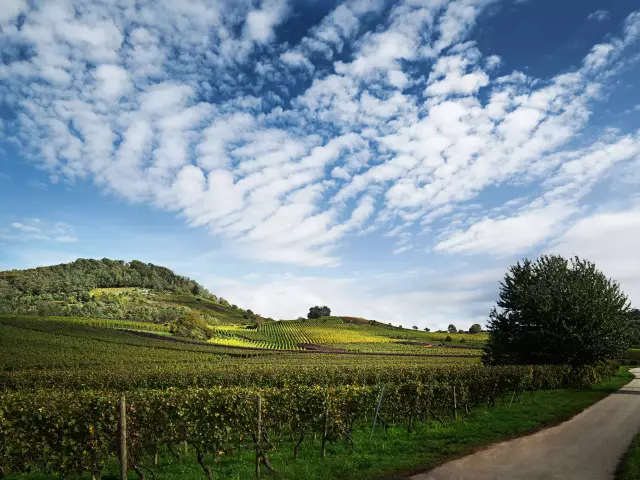
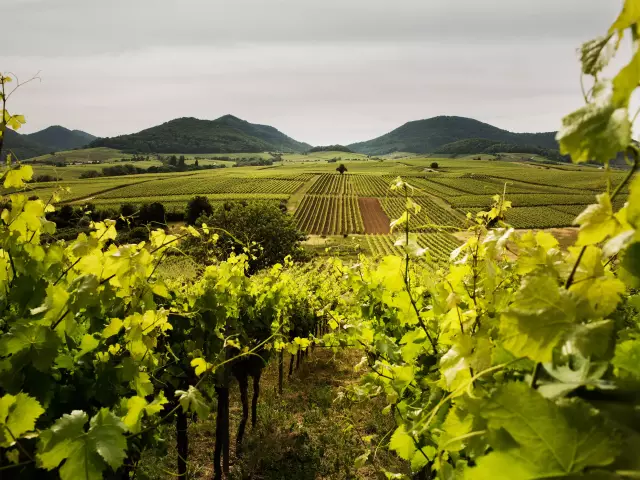
The Ahr is one of Germany's northernmost wine regions. It is also one of the smallest, with vineyards extending only 24 km along the Ahr River as it flows toward the Rhine just south of Bonn. From Altenahr, in the west, to the spa town Bad Neuenahr, the vines are perched on steep, terraced cliffs of volcanic slate. In the broad eastern end of the valley, the slopes are gentler and the soils are rich in loess. Four out of five bottles of Ahr wine are red — velvety to fiery Spätburgunder and light, charming Portugieser predominate. Lively, fresh Riesling is the most common white wine produced here. Another specialty of the region is the red variety Frühburgunder.
Geographical location: The Ahr Valley on the fringe of the protective Eifel Hills
Major town: Bad Neuenahr-Ahrweiler
Climate: Mild and favorable, greenhouse-like in some of the steeper sites
Soil types: Deep, rich loess in the lower Ahr Valley (eastern portion); slate, volcanic stone and rocky soils in the middle Ahr Valley (western portion).
Vineyard area (2025): 535 ha · 1 district · 1 collective vineyard site · 40+ individual sites
Grape varieties 2025 [white 21%, red 79%]: Spätburgunder, Riesling, Frühburgunder as well as Müller-Thurgau and Portugieser
Marketing: Most growers are members of the five cooperatives that produce and market about 75% of the region's wine. The State Wine Domain at the 12th-century monastery Kloster Marienthal is the Ahr's largest wine estate. Nearly all of the region's wine is consumed locally or sold to tourists.
Signposted routes through wine country: Rotweinstraße (driving), Rotweinwanderweg (hiking), Ahr-Radtour (cycling)
Varietals

Highlights of wine culture in Ahr
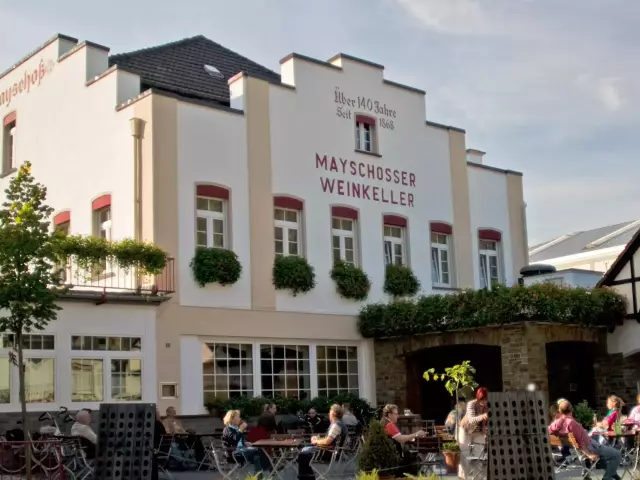
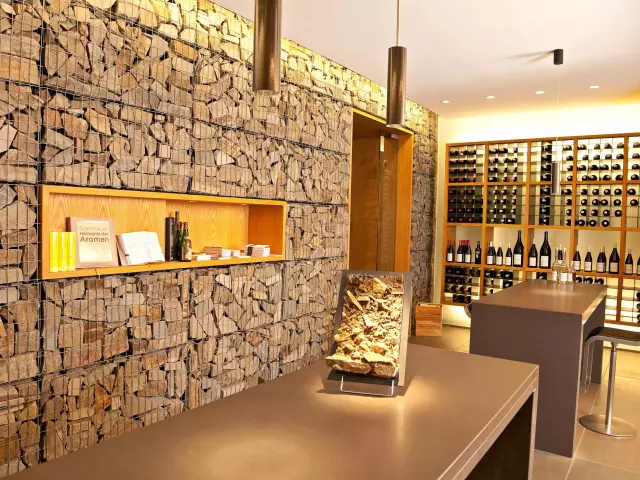
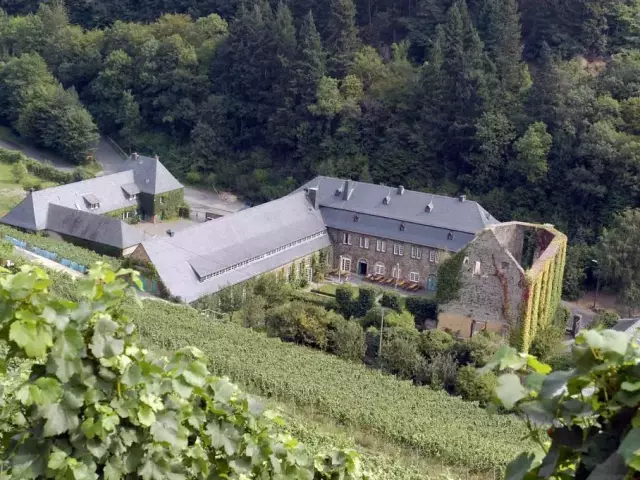
Wineries in the area
-
Show
Weinmanufaktur Walporzheim
Bad Neuenahr-Ahrweiler
Winesights
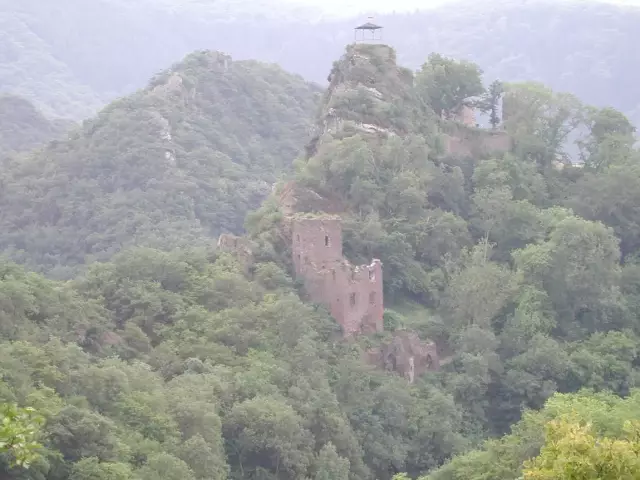
Vinotheques
-
Show
Weinmanufaktur Walporzheim
Bad Neuenahr-Ahrweiler
Wine hike Red Wine Hiking Trail
The red wine from the Ahr is legendary. This should be enough incentive to head out on foot through the dramatic landscape and find out for yourself
Contact
-
Ahrwein e.V.
53474 Bad Neuenahr-Ahrweiler-Bad Neuenahr Oberstraße 8 Germany