

Cheese & Wine
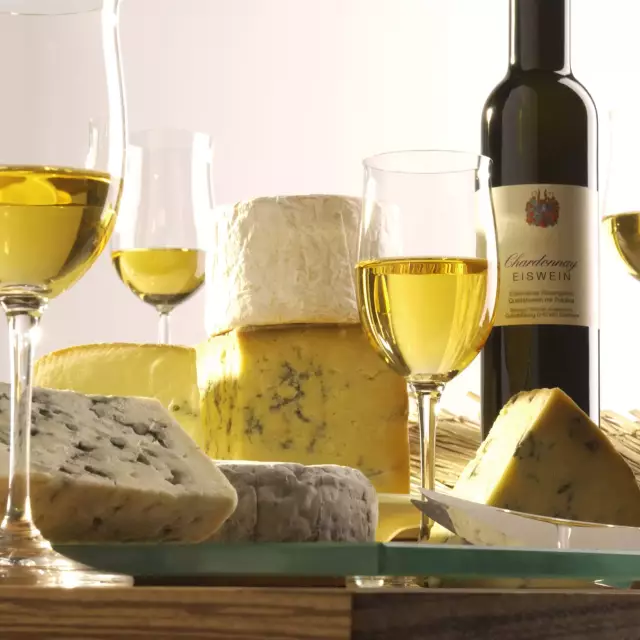
Cheese and wine - a classic culinary delight! Contrary to popular belief, it is more often the white wines than the red wines that really complete the enjoyment. In any case, you are guaranteed to find numerous suitable companions to all cheese variations among the many excellent German wines.
Facts
-
20.68kg
is the per capita consumption of cheese in Germany
-
4
most popular varieties: Gouda, Emmental, Camembert and cream cheese
-
2%
market share accounted for by purely plant-based cheese
A few basic considerations should be made when choosing wine to accompany cheese: For example, cheese and wine from the same region often go well together due to the same climatic and geographical conditions. When it comes to the interplay of flavours, cheese and wine should be roughly equally strong or mild. The more mature the cheese is, the richer and fuller-flavoured the wine is recommended. Cheese with a delicate flavour, on the other hand, goes well with a
subtle, delicate wine.
Sour, salty or very flavourful cheeses require a sweet wine as a counterbalance, i.e. noble wines such as Trockenbeerenauslese or ice wines. Wines emphasising acidity, on the other hand, are well suited to creamy cheeses, while they often make firmer cheeses appear bitter. The harder the cheese, the more tannins the wine can tolerate.
Which wine goes best with which type of cheese?
Slightly spicy white wines with a subtle acidity, such as a semi-dry Riesling, harmonise well with mildly spicy soft cheese with white mould, such as Brie or Camembert. Red wines with less tannin, such as a Pinot Noir, Black Riesling or Trollinger, are also suitable, as is a Burgundy sparkling wine.
A Gewürztraminer is an ideal partner for a red mould wine. A fresh Pinot Gris or fruity to full-bodied red wines such as a Pinot Noir can also be served with it. The very spicy cheese can also be softened with sweeter bouquet wines such as a muscatel.
Blue mould cheese contains a strong acidity because fat is broken down into glycerine, among other things. As the sweetness cancels each other out in terms of flavour, a balance must be achieved between cheese and wine. The acidity-sweetness interplay of high-quality sweet to noble Rieslings such as Spätlesen, Auslesen or ice wines offers an interesting flavour experience.
A young, fruity, berry Pinot Noir pairs well with mild sliced cheeses such as young Gouda, Edam cheese or buttered cheese, as does a dry Silvaner with a delicate herbaceous flavour or a creamy Pinot Gris.
More crispy cheeses such as medium-aged Gouda, young mountain cheese, Appenzeller or Gruyère go very well with a fruity, dry red wine such as Trollinger, Merlot or Dornfelder. As a white wine, a fine tart Riesling or a traditional Gutedel (Chasselas) is recommended.
Dry but fruity white wines such as a very young Pinot Blanc or lighter red wines with a low alcohol content, such as a Trollinger, are suitable for a young, mild hard cheese, Allgäuer Emmentaler or Bergkäse. A full-bodied Pinot Gris or Chardonnay is ideal with a more mature hard cheese, which is stronger and spicier, or a strong, intense red wine.
Mild-flavoured goat and sheep cheeses are ideal with young, light white wines such as fruity Silvaner or Pinot Blanc, but a sparkling, fresh rosé can also be used here. Not too heavy noble wines also harmonise here.
Milk-accentuated fresh wines harmonise best with low-acid, fruit-accentuated white wines with a subtle residue, such as a sweet to sweet Müller-Thurgau or a light Silvaner.
Which wine goes well with tart, salty or very flavourful cheese?
Sweet wines, Trockenbeerenauslese or ice wines provide a nice counterbalance to strong and flavoursome cheeses.
Teaser
-
-