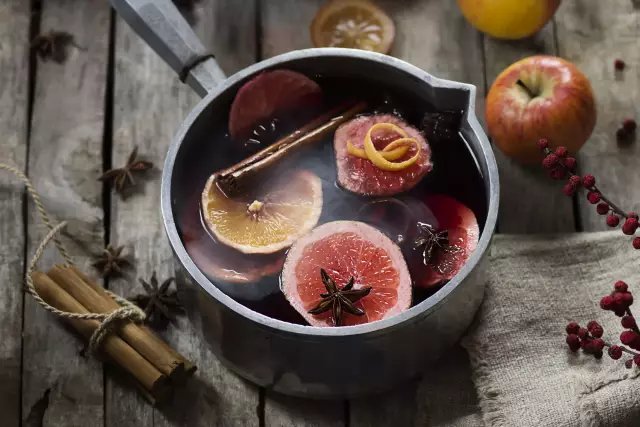

New Wine ("Federweißer")
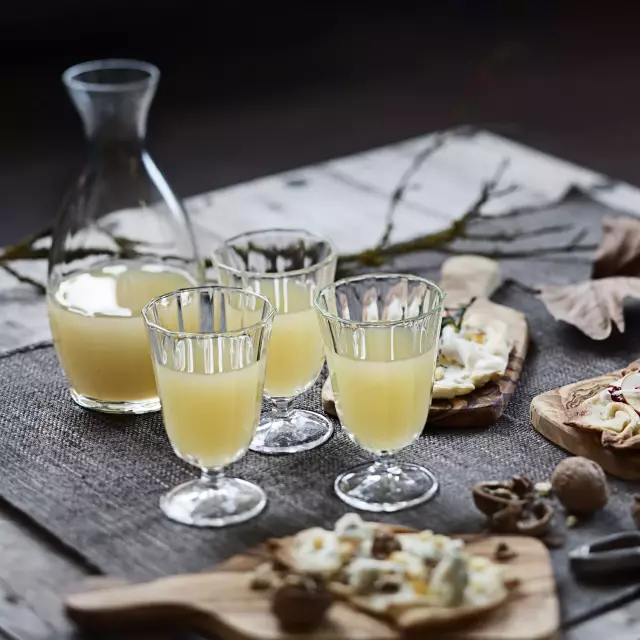
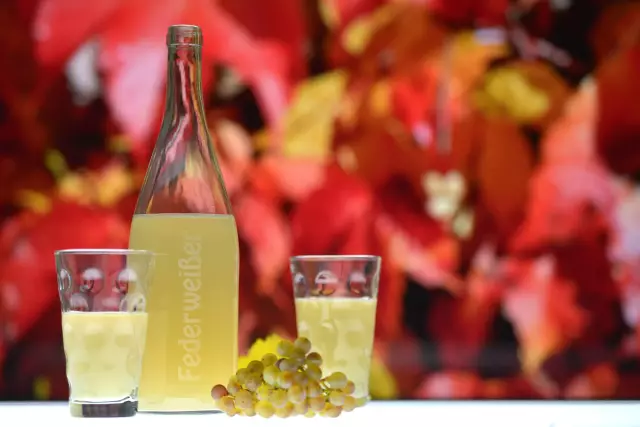
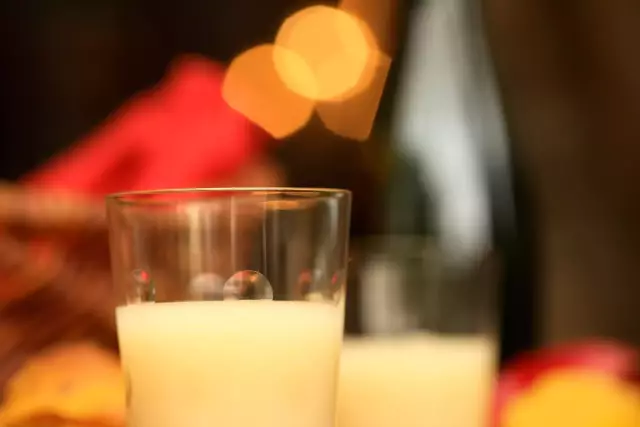
If you hold the glass to your ear, Federweißer (new wine) sounds like murmuring waves. When the time of the grape harvest has come, you can get 'Rauscher', 'Sauser' or 'Brauser', these local terms are used for Federweißer in Germany, on every street corner.
Facts
-
5 %
by volume alcohol content
-
around 2
million liters are sold annually in Rhineland-Palatinate
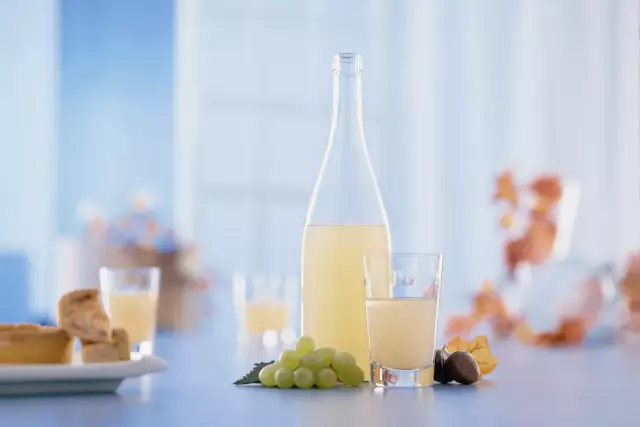
Steffen Schindler, marketing director for Wines of Germany (DWI), puts it this way: “Federweißer is a pleasure that defines autumn and the grape harvest just as much as a delicious onion tart.” Ideally, you drink Federweißer when it has come half way between grape juice and wine, when sweetness, alcohol content and fruit acidity are well balanced. At this stage, its alcohol content amounts to around 5 % vol. watch video (German language / subtitles)
How to handle Federweißer correctly
Owing to the high demand for the new wine, Federweißer is on offer all over Germany these days and can be bought in supermarkets as well as specialist wine stores. But you have to be careful when you buy it: Since fermentation continues inside the bottle, it should always be sealed with a closure that is permeable to air, so the carbonic acid can escape. The bottle should be transported standing upright at all times. Wines of Germany recommends to taste a little of the Federweißer once you have reached home. If it tastes just right: Straight into the fridge it goes, because the cold puts a stop to the fermentation process and you will be able to enjoy a perfect Federweißer for a little longer. (Video of Federweisser harvest)
If the Federweißer still tastes too sweet, keep it at room temperature and have another taste after 6-8 hours. Once the perfect degree of sweetness has been achieved, store the Federweißer in the fridge.
How much Federweißer is sold per year?
In Rhineland-Palatinate alone, about two million liters of Federweißer are sold every year.
Varietals

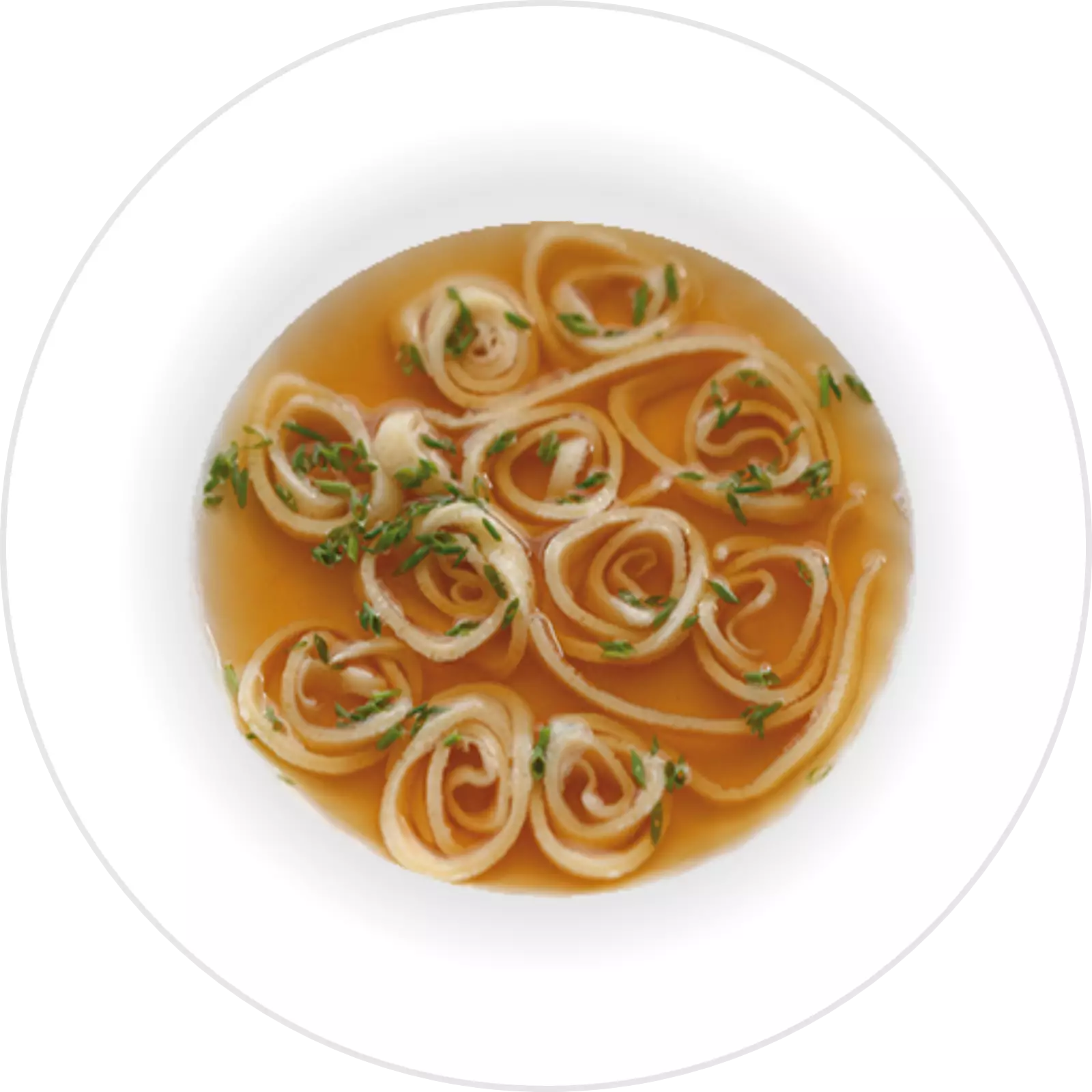
with semi-dry wines Flädlesuppe
with semi-dry wines
- 1 Bund Schnittlauch
- 1 Liter Fleischbrühe
- 150 Gramm Weizenmehl
- 300 ml Milch
- nach Belieben Speckschwarte zum ausreiben der Pflanne
- Etwas Salz
Make a smooth, not too thick batter from the flour, milk, eggs and a pinch of salt. Heat a heavy frying pan on a high heat, rub with bacon fat, pour in a small dollop of batter, allow to spread and fry thin pancakes (flädle).
<p
Leave the pancakes to cool, halve and cut into thin strips.
Place in clear, very hot meat stock and serve immediately.
<p- Trollinger (halbtrocken & feinherb)
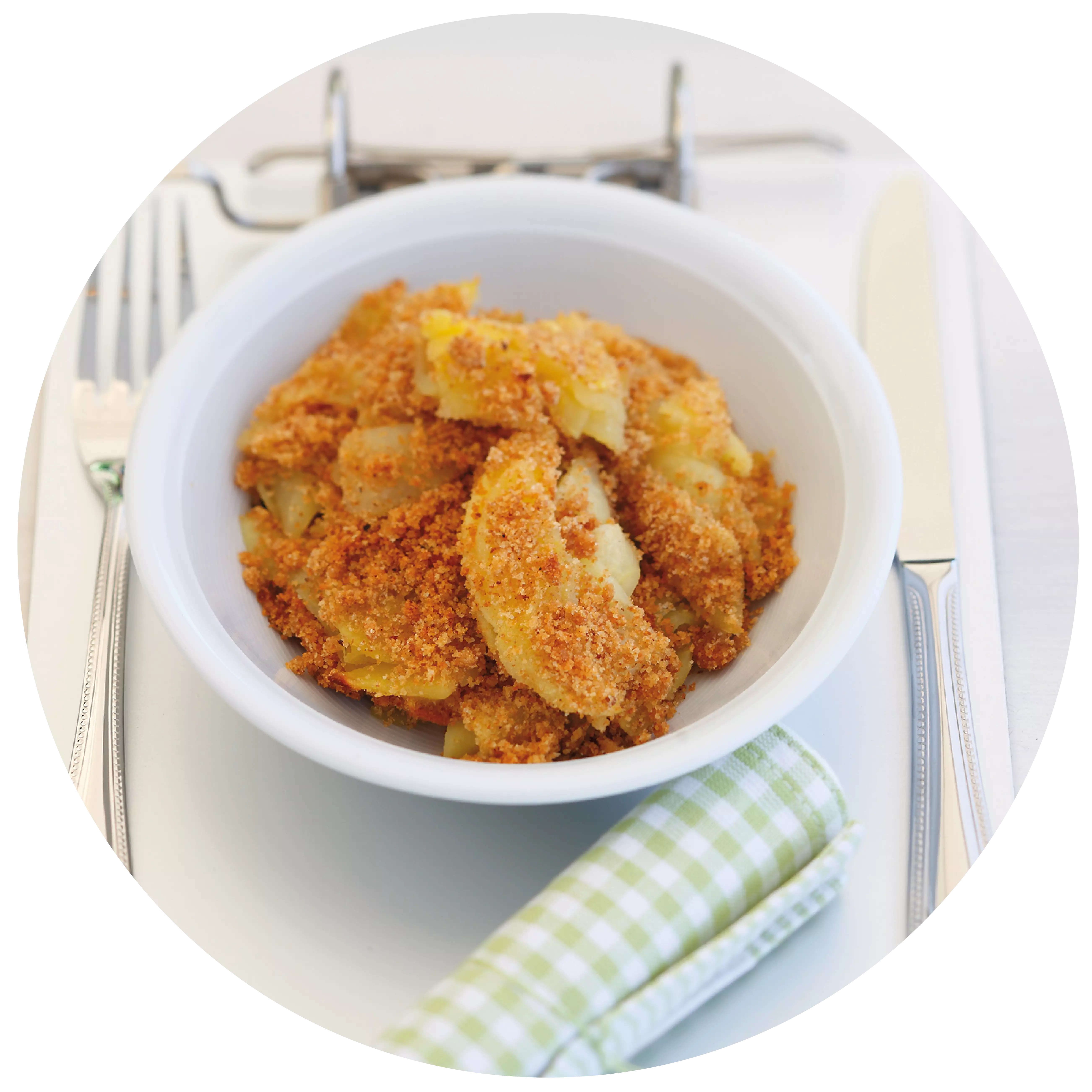
with cinnamon and sugar Odenwald apple soufflé
with cinnamon and sugar
- 1 kg Äpfel
- 250 Gramm Semmelbrösel
- 125 Gramm Zucker
- 2 EL Butter
- 1/2 TL Zimt
- 1 Msp. gemahlene Nelken
- 50 Gramm Rosinen
- 100 ml trockener Weißwein
- 1 EL Rum
- zum Bestreuen Zimt & Zucker
Sauté the breadcrumbs, butter, spices and 2 tbsp sugar in a pan. Peel the apples and cut into slices. Sauté in white wine with rum and sugar until the liquid has almost evaporated.
<p
Fill the greased springform tin alternately with the breadcrumb mixture and apples (bottom and top layer of breadcrumb mixture).
Bake for one ½ hour at 140 °C. Sprinkle with cinnamon and sugar.
- Riesling (lieblich)
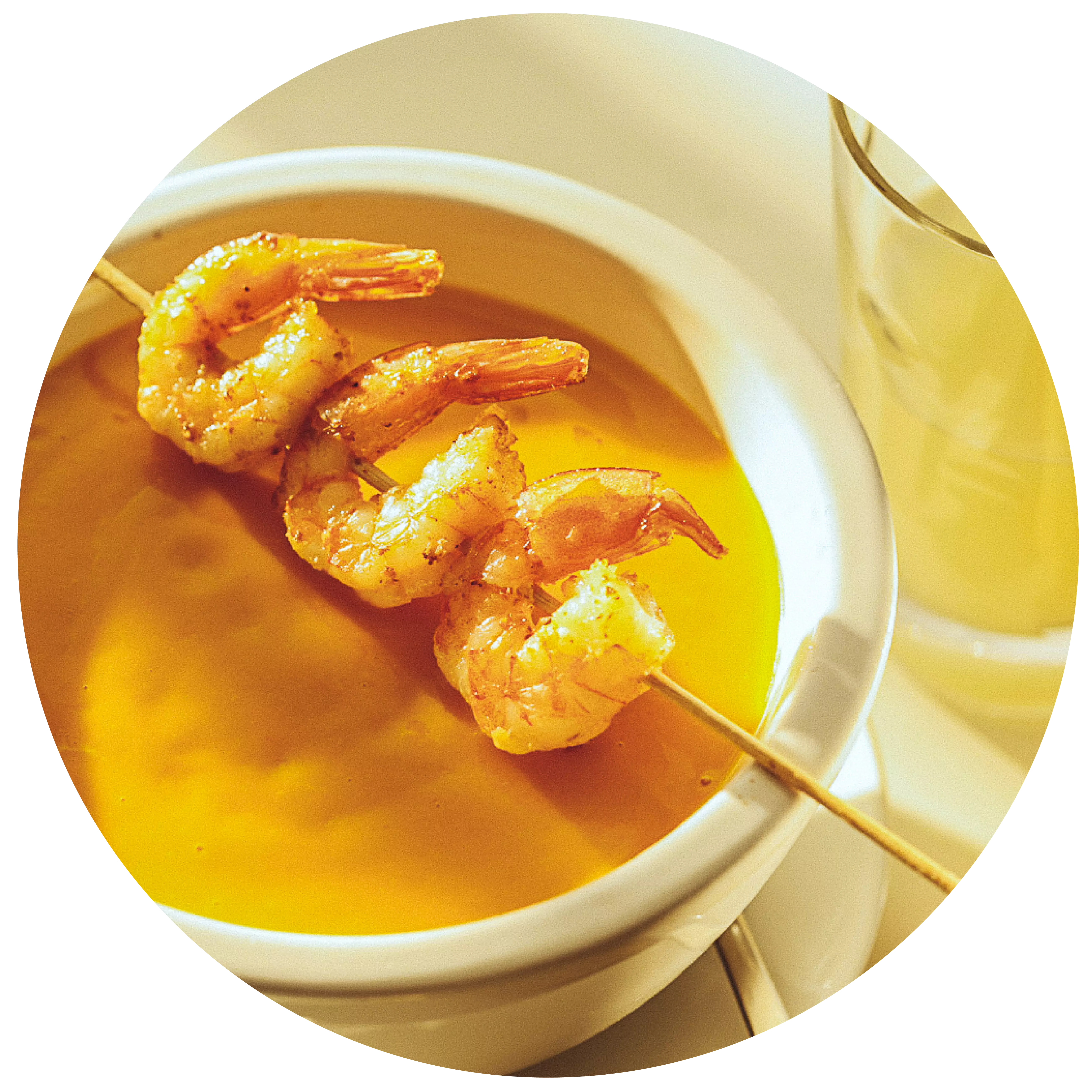
with shrimps Pumpkin soup
with shrimps
- 1 kleiner Hokkaido-Kürbis
- 1 Zwiebel
- 5 cm Ingwer
- 2 EL Butter
- 750 ml Gemüsebrühe
- 300 ml Kokosmilch
- 12 mittelgroße Shrimps
- 2 EL Olivenöl
- Eine Prise Salz & Pfeffer
Peel and dice the pumpkin, onion and ginger and sauté in the butter.
Deglaze with the vegetable stock and sauté for about 15 to 20 minutes until soft.
Sauté the shrimps in a little olive oil and leave to cook over a low heat for a few minutes. Place on wooden skewers and keep warm in aluminium foil.
When the vegetables have been steamed until soft, blend finely with a hand blender. Stir in the coconut milk and season with salt and pepper to taste.
Serve the soup in large cups and garnish with the shrimp skewers.
Freshly baked white bread goes well with this.
- Muskateller (halbtrocken & feinherb)
- Federweißer (brut nature)
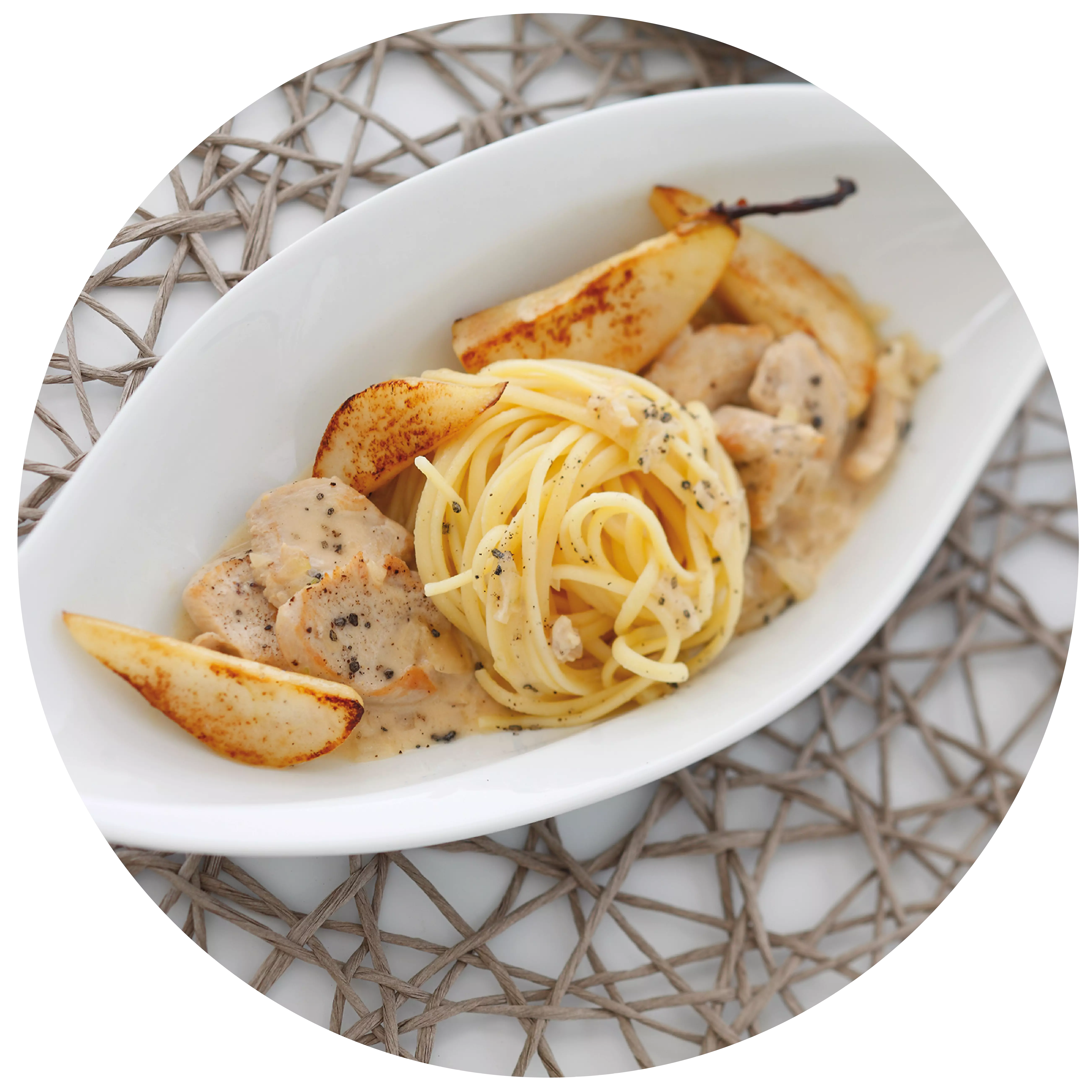
with pear wedges Chicken breast strips
with pear wedges
- 500 Gramm Hähnchenbrustfilet
- 2 reife Birnen
- 200 ml Birnensaft
- 100 ml Sahne
- 1 ganze Zwiebel
- 4 EL Olivenöl
- nach Belieben Salz & Pfeffer
Cut the chicken breast fillet into strips. Peel the onion and cut into cubes. Heat the olive oil in a pan and fry the meat in it. Add the diced onion and season with salt and freshly ground pepper.
Wash and peel the pears, remove the skin, cut into wedges and sauté in the pan. Deglaze with the pear juice and allow to reduce slightly.
<p
Finally, add the cream and season to taste.
- Müller-Thurgau (halbtrocken & feinherb)
- Kerner (halbtrocken & feinherb)
Teaser
-
Young wine in autumn
Autumnal delight -
Federweißer with onion tart
The perfect pairing: Federweißer with onion tart -
Young wine in autumn
The sound of the sea in a glass