
Ice Wine
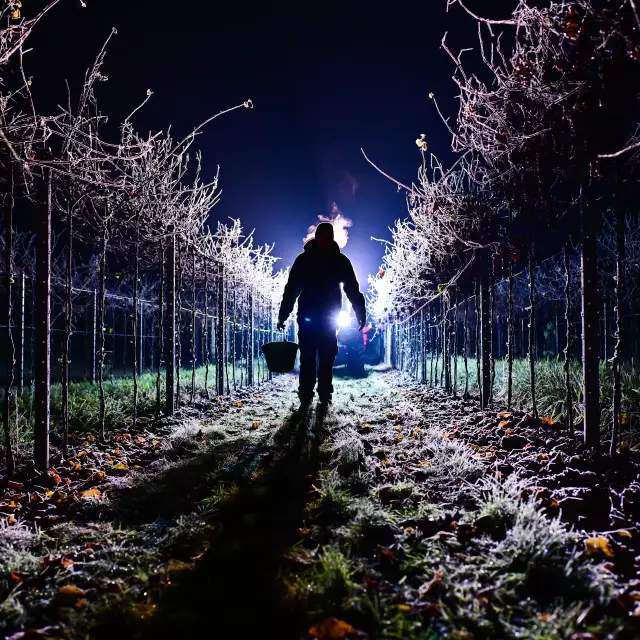
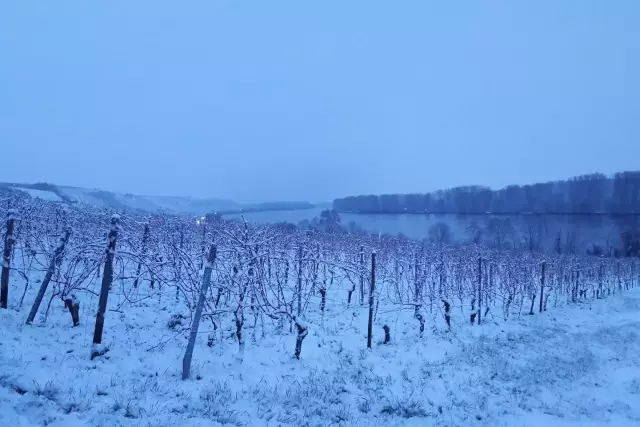
Wenn Winzer pokern, ist der Einsatz hoch. Es geht um Trauben, die länger als sonst üblich am Rebstock hängen bleiben und auf Temperaturen von mindestens -7°C warten.
Facts
-
-7°C
Grapes that hang on the vine longer than usual and wait for temperatures of at least -7°C can be used for ice wine.
-
1830
Ice wine was first documented in 1830, when winemakers in Dromersheim near Bingen in the Rhine-Hesse region accidentally discovered on February 11 that a wonderfully sweet must could be made from frozen grapes.
-
100
German ice wines usually have very high natural residual sugar contents of well over 100 grams per liter
Ice wine - a winemaker's gamble
In some years, precious rarities reward winemakers' willingness to take risks. When winemakers play such poker, the stakes are high. It's about grapes that stay on the vine longer than usual and wait for temperatures of at least -7 ° C. The winemaker's game with nature can last until January, and in rare cases until February. For the winemaker, it is all or nothing, because the ‘ice wine poker’ carries the risk of total loss.
If it doesn't get cold enough, ice wine cannot be produced. Only about 5-10% of the original harvest quantity is bottled as ice wine on average. The remaining amount of grapes is selectively cut out or falls victim to the unpredictable weather conditions.
The winemaker's masterpiece
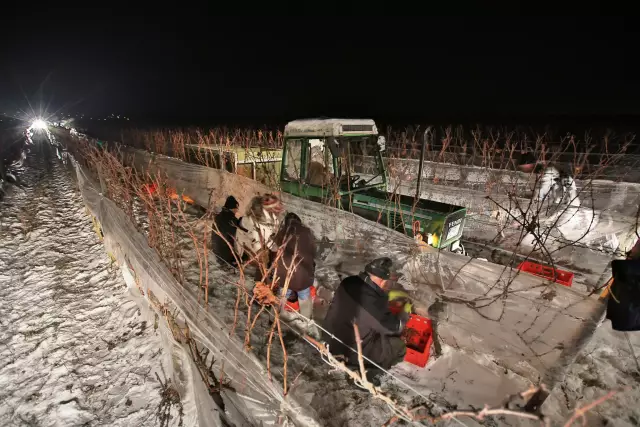
The actual ice wine harvest, which in the vast majority of cases takes place in the early morning hours, is exhausting. The cold makes the fingers rigid and sensitive to pain. The frozen berries are laboriously harvested, and in the end the harvest quantity is often only between 300 and 500 liters per hectare. Nevertheless, the production of an ice wine is a challenge that a winery likes to face because this specialty is always seen as a masterpiece of the winemaker, which can only be produced in northern wine regions.
These requirements make things exciting not only for the winemaker but also for ice wine fans from all over the world who keep looking at the thermometer from the start of the harvest, hoping for a cold snap. The wine, which is produced as a rarity right from the start, draws collectors to the scene. High prices are asked for these noble treasures and the few available bottles are always in high demand.
The berry must freeze on the vine
It has been known since the very beginning of viticulture that minus degrees can be helpful in wine production. As early as 44 AD, the Roman writer Pliny reported on wines made from frozen grapes. In Germany, ice wine is documented for the first time in 1830, when winegrowers in Dromerheim near Bingen in Rhineland-Hesse accidentally discovered on February 11 that a wonderfully sweet must could be obtained from frozen grapes. With an amendment to the German Wine Law in 1982, "Eiswein" was raised to an independent attribute with corresponding regulations for berry selection, such as a minimum must weight of 110 to 128 ° Oechsle, depending on the growing region.
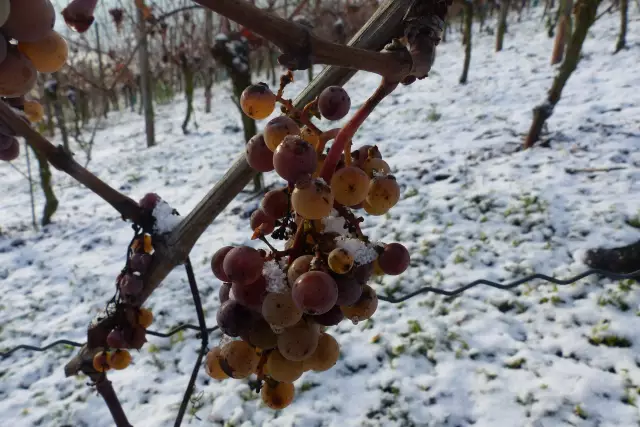
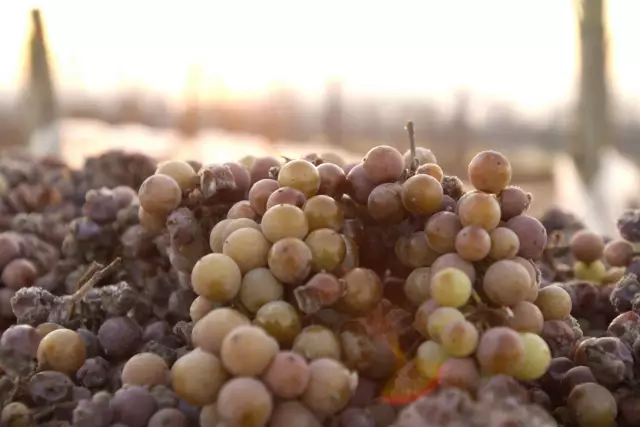
In contrast to the other noble sweet wines such as Auslesen, Beerenauslesen and Trockenbeerenauslesen, the secret of ice wine lies in the dense concentration of the berry ingredients and a comparatively high degree of acidity. This phenomenon is achieved by freezing the berries on the vine. At least -7 ° C is required before the ice wine grapes can be harvested, ideally it is -10 to -12 ° C. The naturally frozen grapes are pressed in this “icy” condition early in the winter morning. The water contained in the berries remains as ice on the wine press, while only the sweetest juice, whose freezing point is lower than that of water, is obtained as a highly concentrated must.
The yeasts have great difficulty fermenting must with such a high sugar content to wine. Therefore, German ice wines generally have a very high natural residual sugar content of well over 100 grams per liter, but in contrast to southern sweet wines, they only have a relatively low alcohol content - often only around 7% by volume.
A premium ice wine needs healthy grapes
Passionate ice wine growers pay close attention to a healthy harvest without botrytis, which is responsible for the so-called noble rot. A premium ice wine needs above all healthy grapes as a starting material and this is exactly where the taste differs from other noble sweet wines such as Beerenauslesen and Trockenbeerenauslesen. A high-quality ice wine does not have the taste characteristics of noble rot. Rather, the healthy grapes guarantee a fresh and concentrated fruity taste, and the wines generally have a relatively stable acidity. Ice wines are therefore a pleasure even at a young age.
The culmination of a culinary evening
Ice wine is a grandiose companion for festive occasions and an excellent aperitif that will delight gourmets. When the meal is completed, ice wine promises a brilliant finish: One can follow the recommendation of ‘like complements like’, especially with fruity desserts, ice cream or sorbets.
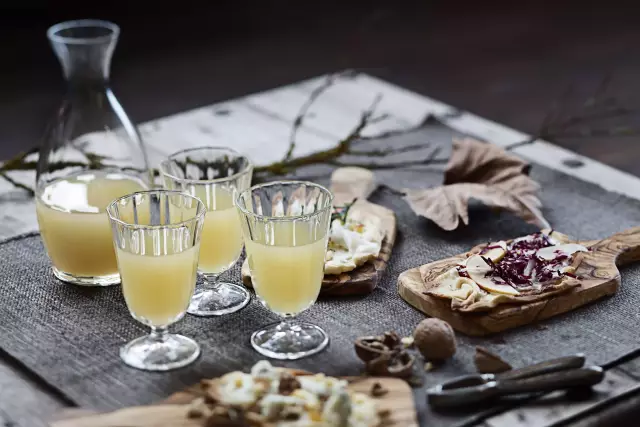
Or alternatively, follow the recommendation that ‘opposites attract’. An interesting contrast, even if it may sound unbelievable at first, is enjoying ice wine with mature fine cheese: on the one hand the salty to slightly bitter notes of the creamy cheese, on the other hand the fruity-sweet aromas of the concentrated wine, both contrasting flavors enveloping the palate and tongue, offering an exceptional taste experience.
Why and how are grapes protected that are left hanging for ice wine?
The ice wine plots are partially defoliated and wrapped in film. This process is primarily used to protect the fully ripe grapes from being eaten by birds and was first used in the 1960s. Without the film protection, no grapes would remain on the vine until December or January.
Varietals

with white wine Cauliflower soup
with white wine
- 3 Stück Schalotten
- 500 Gramm Blumenkohl
- 20 Gramm Butter
- 1 TL Fenchelsaat
- 50 ml Weißwein
- 800 ml Gemüsebrühe
- 100 ml Schlagsahne
- 1 Prise Zucker
- nach Geschmack Salz & Pfeffer
Peel the shallots and cut into slices.
Clean and chop the cauliflower.
Melt the butter in a pan, sauté the shallots with the fennel seeds over a medium heat for 3 minutes until colourless. Add the cauliflower, sauté for 2 minutes, season with salt and sugar.
<p
Deglaze with white wine, bring to the boil and top up with vegetable stock and whipping cream. Simmer over a low heat for 20 minutes.
Blend with a hand blender, adding stock if necessary to reach the desired consistency.
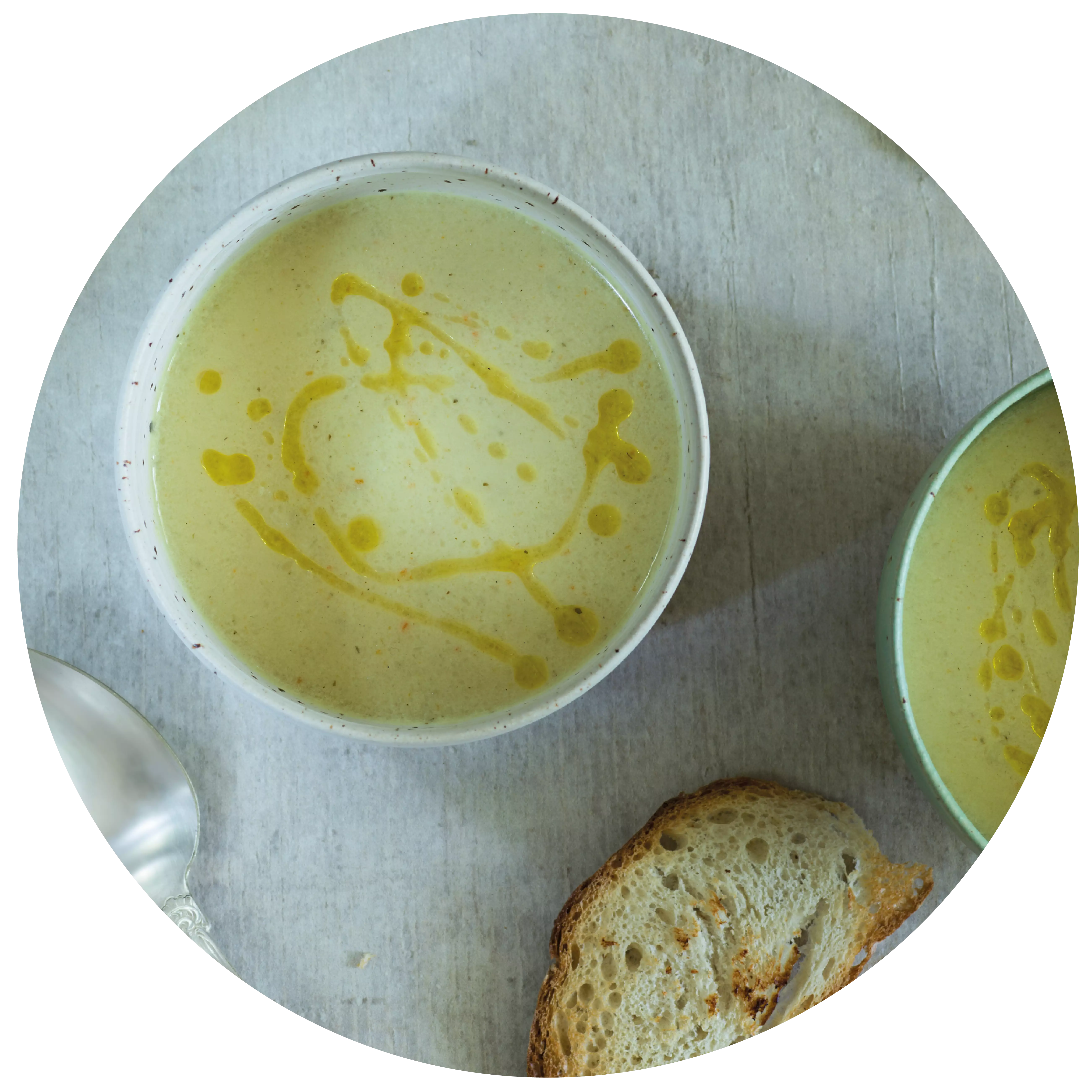
Serve drizzled with a few drops of olive oil.
- Silvaner (trocken)
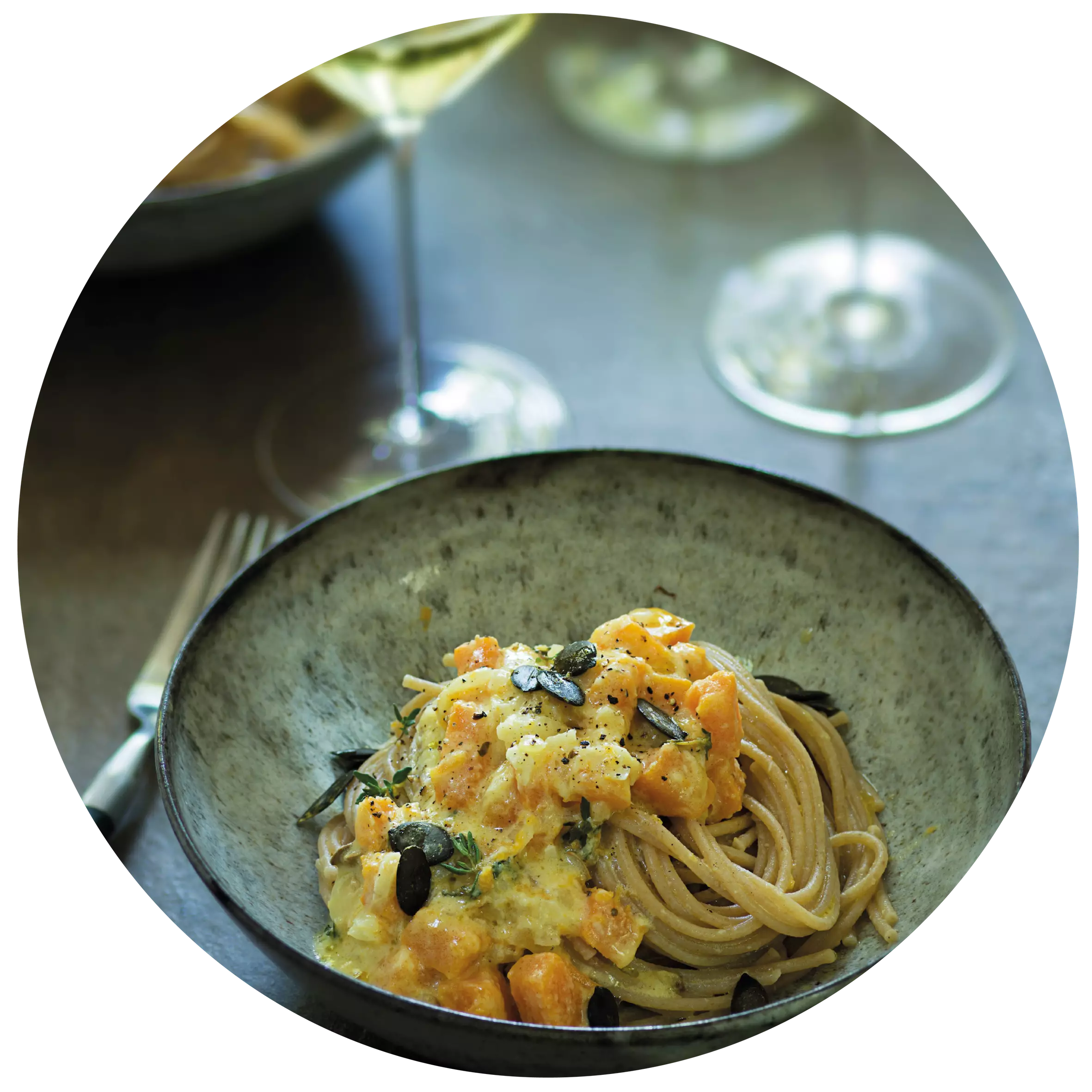
with pumpkin and white wine sauce Pasta with pumpkin and white wine sauce
with pumpkin and white wine sauce
- 750 Gramm Butternut-Kürbis(se)
- 3 kleine Zwiebeln
- 2 Zehen Knoblauch
- 1 Becher Crème fraîche
- 250 ml trockener Weißwein
- 500 ml Gemüsebrühe
- 25 Gramm Parmesan oder ähnlicher Hartkäse
- 400 Gramm Spaghetti oder andere Nudeln
- nach Geschmack Salz, Pfeffer, Zucker
- 4 EL Kürbiskerne, evtl. gehackt
- nach Belieben Muskat, Thymian
Sauté the garlic and onions until translucent. Dice the butternut squash and add, season with pepper and sugar. When the cubes are still firm, pour in the white wine and vegetable stock. Continue cooking until the squash is firm to the bite.
In the meantime, cook and drain the pasta.
Add the thyme, nutmeg, salt and crème fraîche to the boiling pumpkin, bring to the boil and thicken. Stir in the parmesan and season to taste. You can also crush some diced pumpkin to make the sauce sweeter.
Arrange the pasta on plates and top with the pumpkin sauce.
Sprinkle with pumpkin seeds.
- Scheurebe (trocken)
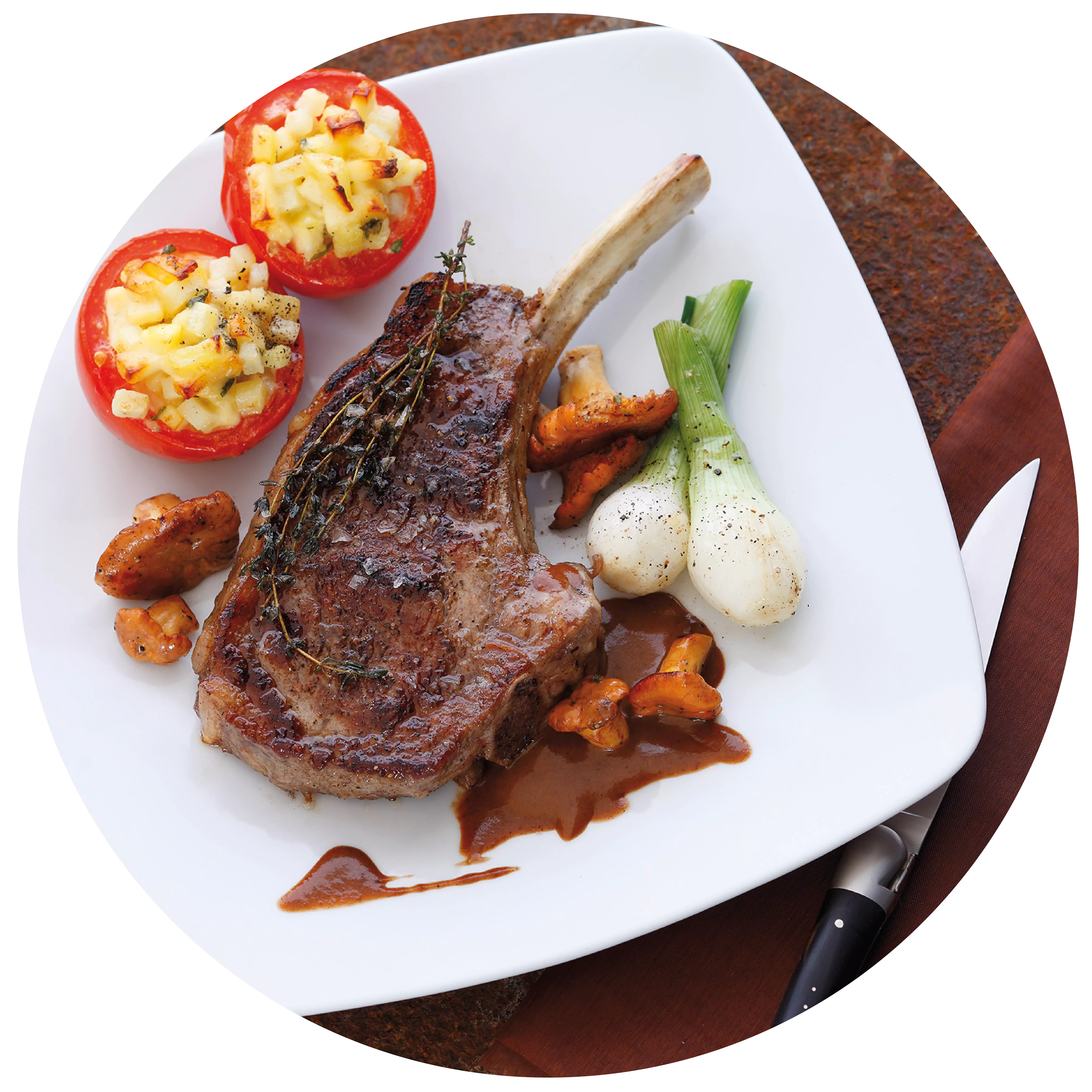
with chanterelle and onion leek, served with potato and grilled cheese ragout in grilled tomato Chop of Hunsrück veal
with chanterelle and onion leek, served with potato and grilled cheese ragout in grilled tomato
- 4 x 300 Gramm Kotelettes
- 250 Gramm Pfifferlinge
- 4 große Kartoffeln
- 2 große Grilltomaten
- 180 Gramm Flammkäse
- 50 Gramm Knollensellerie
- 200 ml Spätburgunder
- 200 ml Sahne
- 50 Gramm Butterschmalz
- 2 EL Butter
- 1 EL Rapsöl
- 6 Stück Lauchzwiebeln
- 1 kleine Knoblauchzehe
- je 1 Zweig Thymian & Rosmarin
- je 1 TL Majoran & Oregano
- nach Belieben Salz & Pfeffer
Peel the potatoes, celery and garlic clove, crush the garlic and cut the potatoes and celery into small cubes. Heat the rapeseed oil in a pan, add the potato and celery cubes, sauté briefly and top up with ⅔ of the cream. Season with salt, pepper and the crushed garlic and leave to simmer for approx. 6 minutes. Add the oregano, marjoram,
add a little thyme and the diced flambé cheese and remove from the oven immediately.
Season the veal chops with pepper, fry in the pan in hot clarified butter for approx. 3 to 4 minutes on both sides and then cook in the oven at 160 degrees for 8 to 9 minutes. Then leave the meat to rest briefly.
Cut the grilled tomatoes in half, remove the skin, place on a baking tray and fill with the potato and flambé ragout. Place the baking tray in the oven with the chops for approx. 6 - 7 minutes. Add 1 tbsp of butter and the sprig of rosemary to the roasting mixture, deglaze with the Pinot Noir, reduce a little and refine with the remaining cream. Season to taste with salt and pepper.
Clean the chanterelles and spring onions. Wash the spring onions well, cut into 5 cm pieces, blanch briefly in salted water and rinse in ice water. Heat 1 tbsp butter in a pan, add the chanterelles and sauté for 2 - 3 minutes. Add the spring onions and the rest of the thyme and season with salt and pepper.
<p- Riesling (trocken)
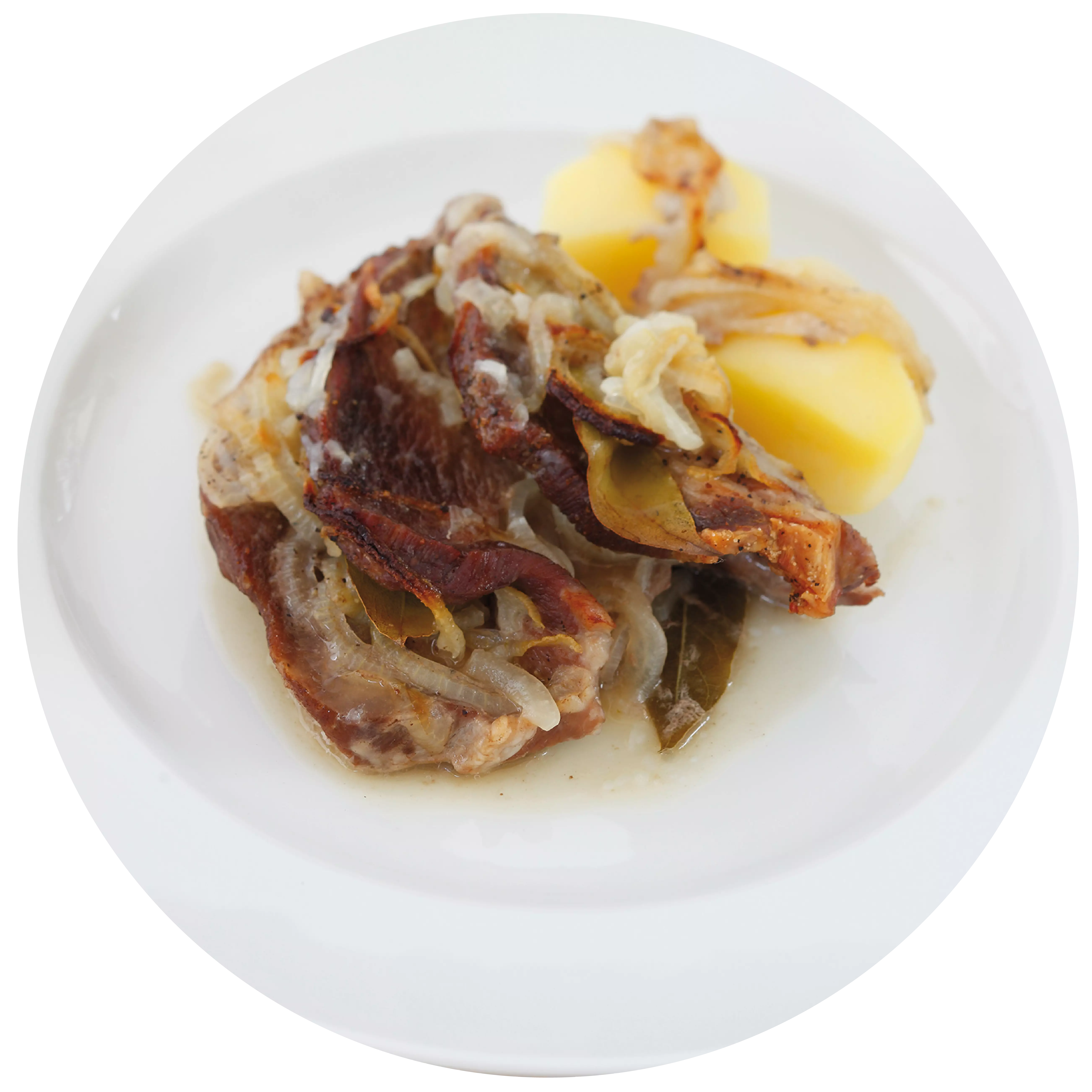
(artificial potted meat) in the style of the house "Kunschthäwwelfläsch"
(artificial potted meat) in the style of the house
- 1 kg Schweinekamm
- 2-3 ganze Zwiebeln
- nach Belieben Lorbeerblätter, ganze Nelken, gemahlener Kümmel, Pfefferkörner
- 500 ml Rivaner oder Silvaner
- nach Geschmack Salz & Pfeffer
A few days before preparation, have a piece of pork neck picked up from the butcher. Alternatively, salt and pepper the pork neck yourself before preparation. The day before, cut into the pork neck with a sharp knife at a distance of approx. 1.5 cm, but do not cut all the way through.
Peel 2-3 onions, halve and cut into rings. Prepare the bay leaves, cloves, caraway seeds and pepper. Place a few slices of onion, a clove, some ground cloves and pepper in the incisions and a bay leaf in every other incision. Place the remaining onions, one or two cloves and a bay leaf in a large roasting tube, place the meat on top and pour in the white wine. Close the roasting tube tightly and leave the meat to marinate overnight in the fridge.
Then place the roasting tube on the cold oven rack and cook for approx. 1½ to 2 hours at 200 °C (gas mark 4, fan oven 180 °C).
- Müller-Thurgau (halbtrocken & feinherb)
- Silvaner (halbtrocken & feinherb)
Teaser
-
-
-
-