
Hessische Bergstraße
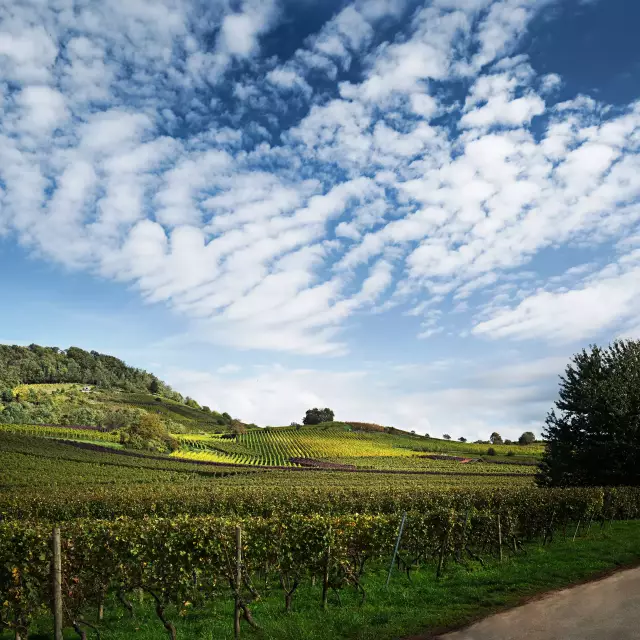
When it is still cool in March or April in some places, the almond blossom already begins on the Hessian Bergstrasse. Spring usually starts a few days earlier.
Facts
-
440 ha
Vineyard area 2025
-
23
single vineyards
Hessische Bergstraße - Spring awakening
Spring and almond blossoms usually come to the Hessische Bergstrasse earlier than other regions, which may still be feeling chills in March or April.
Forsythia, cherry, apricot, and magnolia trees follow the almond blossoms. But it’s not only the magnificent scenery that delights visitors. Whether in Zwingenberg, Heppenheim, Alsbach, or Bensheim—picturesque old town quarters invite guests to linger everywhere. The lively villages along the old Roman road strata montana and the quiet valleys of the Odenwald provide a welcome contrast. With game and trout from the Odenwald and a good Bergsträßer wine, one quickly feels at home here.
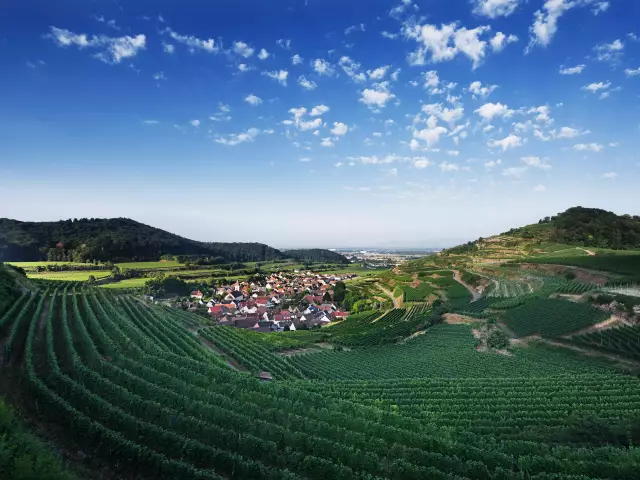
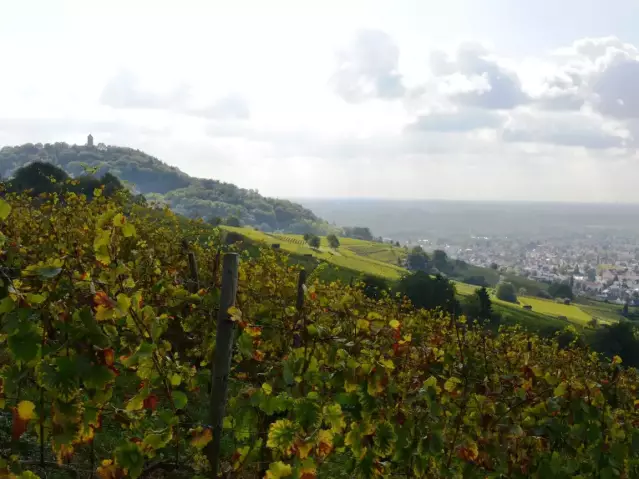
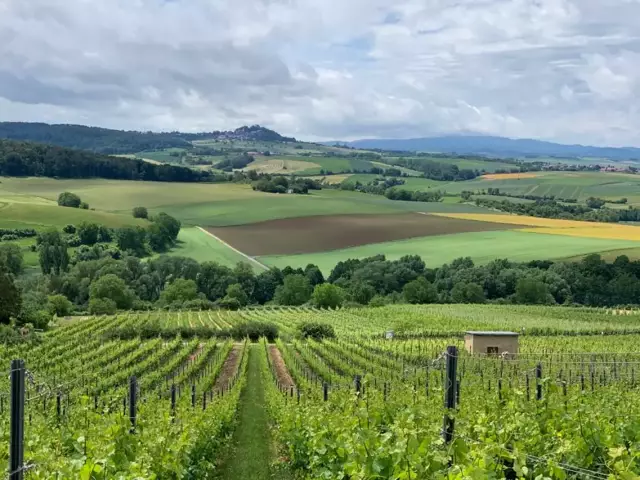
The Hessian part of the Bergstraße has been an independent wine-growing region since 1971. Its 440 hectares of vineyards are divided into two geographically separate areas: the Starkenburg Region begins south of Darmstadt with a few scattered vineyards that become more continuous from Zwingenberg southward. Key wine-growing centers are found in Auerbach, Bensheim, and Heppenheim. This area reaches its southern limit at the border of the state of Hesse. The second, much smaller area—the Odenwald Wine Island—is officially called the Umstadt District (Bereich Umstadt), with the small town of Groß-Umstadt at its heart.
White wine varieties dominate the region at the foot of the Odenwald, especially Riesling (149 ha) and Pinot Gris (56 ha).
Overview Hessische Bergstraße
Geographical location: Bordered by the Rhine on the west and the protective Oden Forest on the east, the Hessische Bergstraße extends from Darmstadt to just north of Heidelberg. The region also boasts a small "island of wine" near Groß-Umstadt on the eastern outskirts of Frankfurt.
Major town(s): Bensheim, Heppenheim
Climate: Ample sunshine and sufficient precipitation for vines to thrive
Soil types: The soils are varied, ranging (north to south) from porphyry-quartz to weathered granite to sand and loess-loam
Vineyard area (2025): 440 ha · 2 districts · 3 collective vineyard sites · 20+ individual sites
Grape varieties 2025 [white 78% · red 22%]: Riesling, Pinot Gris, Pinot noir, Pinot Blanc and Silvaner
Marketing: More than half of the region's wine-growers deliver their grapes to the regional cooperative cellars in Heppenheim. The State Wine Domain in Bensheim is the region's largest vineyard owner. Given the small size of the region, Bergstraße wines are scarce and mostly consumed by its locals only.
Signposted routes through wine country: The route B-3 (driving) traverses the length of the Bergstraße. The Bergsträßer Weinlagenweg (hiking) is a marked path through the vineyards from Zwingenberg to Heppenheim.
Varietals
Highlights of wine culture in Hessische Bergstraße
Wineries in the area
-
Show
Bergsträßer Winzer eG
Heppenheim
Winesights
Vinotheques
-
Show
Bergsträßer Winzer eG
Heppenheim
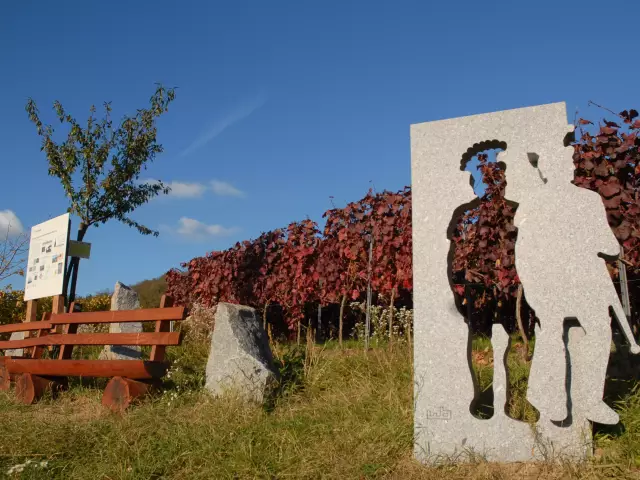
Wine hike Wine and Stone Adventure Trail
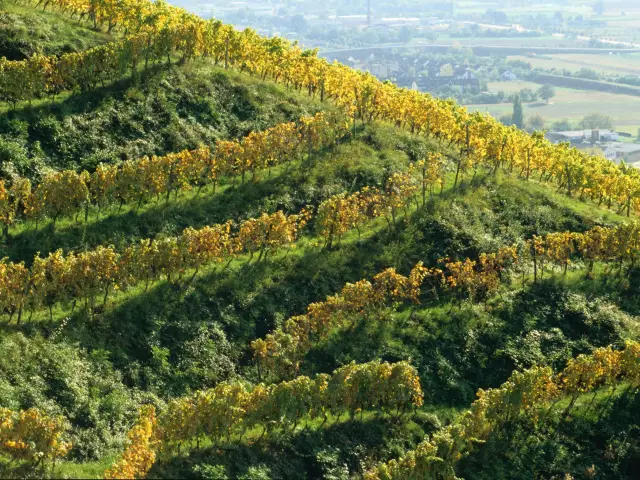
A very special experience of art, knowledge and nature, is a hike on the "Wine and Stone Adventure Trail" in Heppenheim on the Hessische Bergstrasse, inaugurated in April 2007.
Contact
-
Weinbauverband Hessische Bergstraße e.V.
64646 Heppenheim (Bergstraße)- Kettelerstraße 29 Germany